
We recruite Welders who have a diploma, Bachelor, Master degree or higher Level in all types and Fields of welding.
There are a variety of different processes with their own techniques and applications for industry, these include:
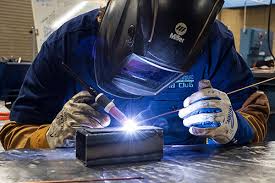
Welding is a fabrication process whereby two or more parts are fused together by means of heat, pressure or both forming a join as the parts cool. Welding is usually used on metals and thermoplastics but can also be used on wood:
- Arc
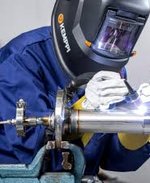
This category includes a number of common manual, semi-automatic and automatic processes. These include metal inert gas (MIG) welding, stick welding, tungsten inert gas (TIG) welding also known as gas tungsten arc welding (GTAW), gas welding, metal active gas (MAG) welding, flux cored arc welding (FCAW), gas metal arc welding (GMAW), submerged arc welding (SAW), shielded metal arc welding (SMAW) and plasma arc welding.These techniques usually use a filler material and are primarily used for joining metals including stainless steel, aluminium, nickel and copper alloys, cobalt and titanium. Arc welding processes are widely used across industries such as oil and gas, power, aerospace, automotive, and more. - Friction
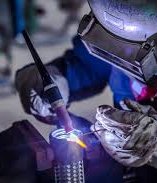
Friction welding techniques join materials using mechanical friction. This can be performed in a variety of ways on different welding materials including steel, aluminium or even wood. The mechanical friction generates heat which softens the materials which mix to create a bond as they cool. e.g, friction stir welding (FSW), friction stir spot welding (FSSW), linear friction welding (LFW) and rotary friction welding (RFW). It doesn’t require the use of filler metals, flux or shielding gas. Is frequently used in aerospace applications, ‘non-weldable’ light-weight aluminium alloys or across industry and are also being explored as a method to bond wood without the use of adhesives or nails. - Electron Beam
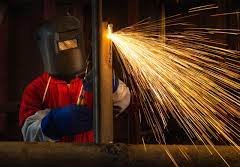
This fusion joining process uses a beam of high velocity electrons to join materials. The kinetic energy of the electrons transforms into heat upon impact with the workpieces causing the materials to melt together.Electron beam welding (EBW) is performed in a vacuum (with the use of a vacuum chamber) to prevent the beam from dissipating.There are many common applications for EBW, as can be used to join thick sections. This means it can be applied across a number of industries from aerospace to nuclear power and automotive to rail.<br> - Laser
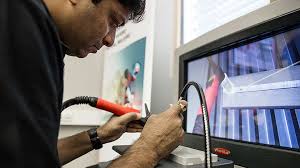
Used to join thermoplastics or pieces of metal, this process uses a laser to provide a concentrated heat ideal for barrow, deep welds and high joining rates. Being easily automated, the high welding speed at which this process can be performed makes it perfect for high volume applications, such as within the automotive industry.Laser beam welding can be performed in air rather than in a vacuum such as with electron beam joining.<br> - Resistance
This is a fast process which is commonly used in the automotive industry. This process can be split into two types, resistance spot welding and resistance seam welding.Spot welding uses heat delivered between two electrodes which is applied to a small area as the workpieces are clamped together.Seam welding is similar to spot welding except it replaces the electrodes with rotating wheels to deliver a continuous leak-free weld.